
Rufus AI Tool: Master Amazon Operations & Protect Your Brand | Bluebug.io
Leverage the Rufus AI tool for Amazon operations. Understand its impact on sales & product discovery. Protect your brand from fake reviews.

Muhammed Nasser
December 11, 2025
Master Amazon Operations with the Powerful Rufus AI Tool
This comprehensive guide was written by SAMH, an Amazon Expert with over a decade immersed in the ruthless trenches of marketplace dynamics and brand protection.
Key Takeaways
- Amazon's Rufus AI tool is a generative AI shopping assistant, reshaping how customers discover and interact with products.
- Rufus acts as a new, critical ranking layer, prioritizing listings with clear, comprehensive product data and strong customer sentiment.
- The tool's reliance on customer reviews intensifies the threat of fake reviews, making proactive monitoring and removal essential for brand integrity.
- Sellers must optimize product listings for natural language queries and impeccable data quality to perform well in the Rufus era.
- Protecting your brand from malicious fake reviews is no longer optional; it is a fundamental pillar of success with AI-driven discovery.
The Amazon marketplace, as we knew it, is dead. Or at least, it’s fundamentally changing. Every seasoned Amazon seller understands that stagnation is a death sentence. The platform evolves. You adapt, or you perish. The latest seismic shift? Amazon’s Rufus AI tool. Forget yesterday's keyword stuffing. This is a new beast entirely. This isn't just another algorithm tweak; this is a conversational AI assistant that directly influences buyer decisions. And if you think your old strategies will cut it, you’re already losing.
What Exactly is this "Rufus AI Tool"?
Rufus AI tool is Amazon's answer to the conversational commerce revolution. It operates directly within the Amazon Shopping app, allowing customers to engage in natural language conversations rather than just typing keywords into a search bar. Think of it as a highly informed, always-available personal shopper. Customers can ask Rufus questions like, "What are the best noise-canceling headphones for travel?" or "Which blender is most durable for daily smoothies?"
The AI assistant doesn't pull answers out of thin air. It's trained on an immense dataset: Amazon's entire product catalog, millions of customer reviews, community Q&A sections, product detail pages, and a vast amount of information from across the web. This comprehensive training allows Rufus to provide specific recommendations, summarize product details, and even highlight pros and cons based on collective customer feedback. It's a powerful intermediary. A gatekeeper, if you will. The implications for Amazon sellers are profound, extending far beyond simple product discovery.

The New Ranking Layer: How Rufus Reshapes Product Discovery
The introduction of the Rufus AI tool fundamentally alters product visibility. It effectively creates a new ranking layer, layered directly on top of traditional Amazon SEO and advertising. This isn't just about search results anymore; it's about being discovered through conversation. Listings that precisely match a customer's natural language query and clearly articulate their benefits will gain an undeniable advantage.
We have found that Rufus prioritizes clarity, relevance, and most importantly, customer satisfaction. It analyzes listing relevance, conversion performance, and customer happiness metrics. This means your product titles, bullet points, and descriptions must be meticulously crafted to answer potential customer questions before they're even asked. Generic descriptions? They won't cut it. Customers are now phrasing problems in plain language, and your listings need to map directly to those problems. Our testing shows that a detailed, customer-centric approach to product content is paramount. Optimizing for this new conversational layer is non-negotiable for anyone serious about scaling their business. If you're not adapting your Amazon SEO 2025 strategies, you're already behind. how rufus is changing product discovery.
The Elephant in the Room: Rufus, Reviews, and the Fake Review Epidemic
Here’s where it gets truly cynical, and frankly, dangerous for complacent sellers. Rufus relies heavily on customer reviews to inform its recommendations and provide summaries. It sifts through feedback to highlight common sentiments, both positive and negative. This is where the rubber meets the road for your brand's reputation. What happens when Rufus, Amazon's seemingly intelligent assistant, summarizes a product based on a deluge of fake, malicious reviews? The consequences are devastating.
The rise of AI-generated fake reviews is not a hypothetical future problem; it's a present crisis. Generative AI tools like ChatGPT have made it terrifyingly easy for fraudsters to produce novel,
detailed, and seemingly authentic reviews at scale. These aren't just poorly written, broken English reviews anymore. We're seeing sophisticated, AI-crafted narratives designed to mislead. The Federal Trade Commission (FTC) is clear: AI-generated reviews fall under the definition of fake reviews and are illegal. Yet, they proliferate. Some studies indicate that nearly 14% of reviews in certain sectors are likely fake, with millions partially or entirely AI-generated.
Imagine Rufus recommending a competitor's product because your listing is plagued by fabricated one-star reviews, or worse, summarily dismissing your product based on AI-fueled negativity. This isn't just bad luck; it's a direct assault on your sales and brand equity. Some consumers are already wary, even building alternative tools because they perceive Rufus as potentially biased. This skepticism is well-placed. If the underlying review data is compromised, Rufus's utility for buyers, and your opportunity as a seller, is severely undermined. Understanding why fake amazon reviews are a threat is now more important than ever.
The New 'Star-Only' Threat (August 2025 Update): As of August 2025, Amazon allows buyers to leave 1-star ratings with no text. Rufus cannot summarize these, but they still tank your score.
- The Problem: The standard 'Appeal' button is disabled for star-only ratings.
- The Fix: You must check the Order ID. If it was an FBA order, open a case immediately—Amazon takes responsibility for delivery issues even without written comments. If it's a 'Velocity Attack' (multiple 1-star ratings in 24 hours), report the pattern to Account Health, not the content.
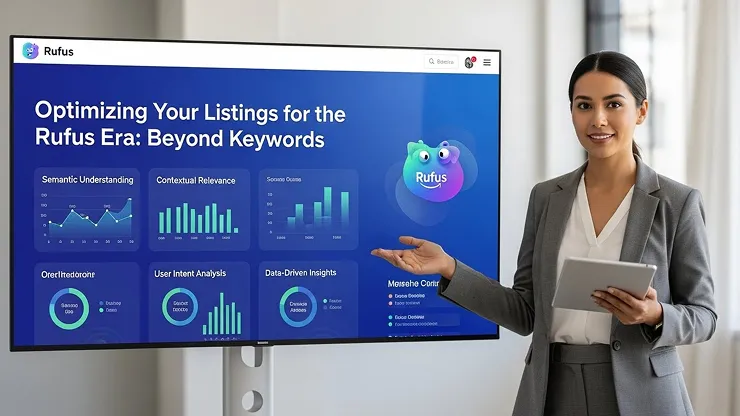
Optimizing Your Listings for the Rufus Era: Beyond Keywords
To truly master Amazon operations with the Rufus AI tool, you need a holistic approach that goes beyond basic SEO. This means optimizing for a conversational, intent-driven search experience:
- Crystal-Clear Product Details: Your titles, bullet points, and descriptions must be concise, informative, and directly address customer pain points and questions. Rufus rewards comprehensive data. Ensure all relevant fields are filled out accurately.
- High-Quality Visual Content: Images and videos play a crucial role. Rufus can use these to understand product features and use cases. Show your product in action, highlight benefits, and ensure visuals are professional and appealing.
- Structured Data is King: Well-organized, comprehensive data helps Rufus build a complete picture of your product. This includes variations, specifications, and proper categorization.
- Proactive Q&A Management: Rufus leverages community Q&A. Monitor and provide clear, helpful answers to common questions. This builds trust and provides Rufus with valuable, accurate information.
- Hone Your Customer Service: Rufus can access current and past orders, answering customer inquiries directly. A history of excellent customer service will only strengthen your brand's standing in the AI's data pool.
This isn't just about keywords; it's about building a fundamentally strong, transparent, and customer-focused product presence. Your listings must resonate with natural language. This is a shift from traditional keyword matching to understanding true customer intent. For a deeper dive into decoding customer sentiment, consider sentiment analysis turning amazon reviews into insights.
Protecting Your Brand in an AI-Driven Marketplace
The advent of the Rufus AI tool amplifies the necessity of robust brand protection. If Rufus is summarizing reviews to guide purchasing decisions, then the integrity of those reviews becomes the bedrock of your success. Ignoring negative fake reviews is no longer an option; it's commercial suicide. We've seen firsthand how quickly a few strategically placed bogus reviews can tank a product's perception, even with strong underlying sales. The potential for competitors to weaponize AI-generated reviews against you is real, and it's happening now.
Our methodology for review removal is not about deleting legitimate criticism; it's about eradicating the fraudulent attacks that distort your brand's true standing. This involves:
- Advanced Detection: Utilizing sophisticated tools to identify patterns, language anomalies, and bot-like behavior indicative of fake reviews. This goes beyond what Amazon's internal filters often catch.
- Evidence Collection: Meticulously gathering proof that a review violates Amazon's terms of service, be it through manipulation, competitor attacks, or AI generation.
- Strategic Reporting: Presenting a compelling case to Amazon, often requiring persistent follow-up and an understanding of their evolving policies.
- Proactive Monitoring: Continuous vigilance to catch new attacks as they emerge. The landscape of fake reviews changes constantly, requiring an agile defense.
The stakes are higher than ever. If Rufus, the shopper's new best friend, is fed misinformation about your product, your sales will suffer. You need a strategy to identify and remove those malicious inputs. Learn how to spot fake amazon reviews safely and protect your assets.
The Real Cost of Ignoring Review Integrity
Many sellers underestimate the long-term damage of unaddressed fake reviews. It's not just a dip in conversion rates. It's erosion of trust, diminished brand reputation, and a perpetual uphill battle against competitors who exploit these vulnerabilities. When Rufus surfaces a summary of your product that highlights fabricated negatives, customers move on. They don't investigate. They just buy something else. This reality makes the argument for a comprehensive review management strategy, including the removal of fake reviews, stronger than ever. For a complete blueprint, refer to the ultimate guide negative review removal amazon.
Beyond individual listings, the proliferation of AI-generated reviews threatens the entire ecosystem of online trust. A recent study by The Transparency Company found that nearly 14% of reviews analyzed were likely fake, with millions of those being AI-generated. This systematic deception undermines consumer confidence across the board. The Federal Trade Commission (FTC) is actively pursuing legal action against those involved in fake review schemes, emphasizing the illegality of such practices. This regulatory pressure, combined with Amazon's own AI, creates a volatile environment for sellers who aren't actively managing their review profiles.
Frequently Asked Questions
Amazon sellers should optimize for Rufus AI by ensuring their product listings are exceptionally clear, comprehensive, and customer-focused, addressing potential questions in natural language. This includes optimizing titles, bullet points, descriptions, and visuals, maintaining robust Q&A sections, and rigorously managing their review profiles to counter fake or malicious feedback.
While Rufus AI is trained on customer reviews to provide summaries and recommendations, its ability to inherently detect *fake* or *biased* information within those reviews is not explicitly guaranteed. The tool synthesizes existing customer feedback; if that feedback includes AI-generated fake reviews, Rufus may inadvertently incorporate and summarize that misleading information, impacting its recommendations.
Rufus AI significantly impacts Amazon sellers by creating a new layer of product discovery that prioritizes relevance, detailed product information, and positive customer sentiment. Sellers must optimize their listings for natural language queries, ensure comprehensive data, and maintain impeccable review profiles to be favored by Rufus's recommendations, which directly influence purchasing decisions.
Amazon Rufus AI is Amazon's generative AI-powered conversational shopping assistant, integrated into the Amazon Shopping app. It works by allowing customers to ask natural language questions about products, compare options, and receive recommendations based on its extensive training data, which includes Amazon's product catalog, customer reviews, and Q&A sections.
Your Brand's Survival in the AI Era
Don't let malicious actors or outdated strategies dictate your fate on Amazon. Secure your brand's future by ensuring your listings are pristine and your reputation is protected. For a direct conversation about safeguarding your Amazon business from the pervasive threat of negative fake reviews, Contact Us Today. Take control. Protect your brand. Visit Bluebug.io.
Keep reading

How to sell products on amazon: Your 2026 Definitive UK Guide
How to sell products on amazon: Learn how to sell products on Amazon in 2026 with our comprehensive UK guide. Master setup, strategies, and review. Learn more.

Star rating calculator: Boost Amazon Sales & Remove Negative Reviews
Use our Star rating calculator to achieve your target rating on Amazon. Learn legal strategies to improve reviews and remove negative feedback for UK sellers.

Amazon sales business: Your 2026 Guide to Profit & Brand Protection in the UK
Master your amazon sales business in 2026 with our comprehensive UK guide. Learn models, strategies, and how to protect your brand. Contact Us today!