
Walmart Holiday Shopping Trends 2026: Seller Decisions
A concise seller guide to Walmart's 2026 holiday research on value, shopping timing, and AI-assisted discovery.

Muhammed Nasser
November 2, 2026
Walmart's holiday research points to price sensitivity, earlier planning, and growing use of AI for comparison and inspiration. These findings are directional, not a demand forecast. Sellers can use them to make offers clearer, time listing work, and improve structured product information.
What Walmart's holiday research signals for marketplace sellers

Walmart reports that 70.2% of surveyed shoppers say lower prices would make holiday shopping easier, while 57.4% want more deals or promotions. More than a quarter, 27.5%, expect to start shopping earlier than last year. The report says 38.4% expect to do most holiday shopping from October through the first half of November and 19.9% from Thanksgiving weekend through Cyber Monday.
The seller implication is not “discount everything.” It is to answer the questions behind value and urgency: what is included, who the item suits, how variants differ, whether the price is accurate, and when the order can arrive.
Match listing updates to when shoppers plan and buy

Use a staged calendar. Early in the season, focus on discoverability and comparison: accurate titles, complete attributes, variant clarity, recipient and use-case language, and adequate inventory. As event windows approach, recheck live prices, delivery promises, offer status, stock cover, and customer questions.
Adapt the broad timing signal to the actual assortment. Consideration-heavy gifts need earlier education, while consumables and hosting supplies can see later waves. Prior-year account data, current traffic, inventory lead times, and margin should determine the final plan.
Prepare product content for AI-assisted discovery
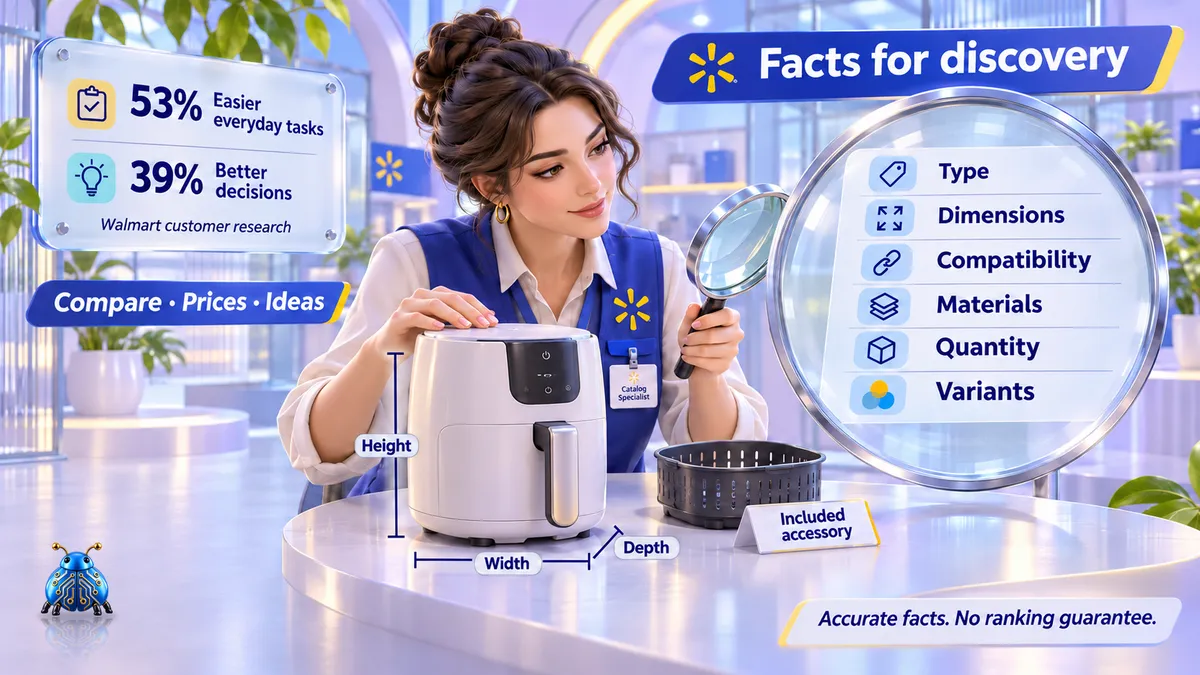
Walmart reports that 53% of its customers say AI makes everyday tasks easier and 39% say it helps them make better decisions. It describes customers using AI to compare products, find prices, and generate ideas.
Complete product types, attributes, dimensions, compatibility, materials, quantities, and variation data. Use natural descriptions that explain the buyer, problem, and differentiator. Avoid speculative AI keyword stuffing. Accurate, consistent product facts help both machine-assisted discovery and human evaluation, but they do not guarantee inclusion or ranking in an AI experience.
FAQ
No. It is first-party shopper research and should be used as directional planning evidence, not a category or item forecast.
No. Define a contribution-margin floor and improve the full value proposition, including quantity, quality, delivery, and clarity.
Prioritize complete structured attributes, consistent specifications, and natural, factual descriptions. Do not add unsupported claims.
Conclusion
Walmart's research supports a practical response: clarify value, align updates with shopper timing, and make product data complete enough to support confident comparison. The objective is better decision support, not invented demand.
Sources
1 refrences
Ready to Take the Next Step?
Bluebug helps marketplace teams turn shopper signals into clearer listings, stronger reputation signals, and measurable operating tests.
Keep reading

Amazon Customized FBA Return Grading: A Seller Setup Guide
A concise guide to customized grading rules, evidence-based criteria, and controlled pilots for FBA Grade and Resell.

Walmart Automotive Catalog Changes: Prepare for January 2027
A concise checklist for Walmart automotive product-type changes, deprecated mappings, and feed testing before January 2027.

Amazon Review Requests Ads: A Controlled Beta Test Guide
Understand Amazon's Review Requests open beta, eligibility, measurement limits, and practical compliance controls for sellers.