
Amazon Local Selling: The Complete Guide for Sellers in 2026
Learn how Amazon Local Selling works, its benefits, fulfillment options, eligibility, setup process, and how sellers can use local sales to grow their business.

Muhammed Nasser
September 27, 2026Selling on Amazon usually means reaching customers far beyond your local market. But for businesses with physical stores, warehouses, bulky products, or local delivery capabilities, there is another way to use Amazon.
Amazon Local Selling allows eligible sellers to make their products available to customers within a defined local area and fulfill those orders through local delivery or other supported fulfillment methods. Amazon describes the program as a way to reach nearby shoppers while offering faster and more flexible fulfillment. (Sell on Amazon)
Instead of treating your physical location and Amazon store as two completely separate operations, Local Selling can connect the two.
Key Takeaways
- Amazon Local Selling helps sellers reach Amazon shoppers within a defined local service area.
- Sellers can use local delivery through Amazon-supported shipping partners or, where available, their own delivery network. (Sell on Amazon)
- The model can be useful for products that are difficult, expensive, or impractical to ship through traditional fulfillment.
- Local Selling can complement an existing Amazon, ecommerce, or brick-and-mortar business rather than replacing it.
- Sellers should carefully manage inventory, delivery coverage, customer service, and operating requirements before expanding locally.
- Amazon currently states that there are no additional Local Selling participation fees beyond the applicable selling-plan and category fees. (Sell on Amazon)
What Is Amazon Local Selling?
Amazon Local Selling is designed to help businesses reach Amazon customers located within their local service area.
Instead of making every product available nationwide, sellers can define the geographic area they want to serve. Amazon states that local delivery areas can be defined down to the ZIP-code level, allowing sellers to control where specific local offers are visible. (Sell on Amazon)
This approach can be particularly useful for businesses that already have inventory in a physical store or warehouse.
For example, a furniture retailer may have large products stored at a local location. Shipping those products through a traditional nationwide fulfillment model may not always make operational or financial sense. Local Selling can provide another way to reach nearby Amazon shoppers.
The main idea is simple:
Use Amazon's customer traffic while keeping fulfillment closer to the customer.
Who Can Benefit From Amazon Local Selling?
Local Selling can make sense for businesses that already have some physical infrastructure or a reliable way to fulfill orders within a defined region.
It may be relevant to sellers that:
- Operate a brick-and-mortar store.
- Maintain their own warehouse.
- Have local delivery vehicles or drivers.
- Sell large or heavy products.
- Offer products that are difficult to ship over long distances.
- Want to test demand in a specific geographic market.
- Already sell through multiple channels and want another source of local customers.
It can also be useful for businesses that want to combine online product discovery with offline operations.
However, Local Selling is not simply a matter of listing a product and waiting for local orders. Sellers need to be able to meet Amazon's operational and customer-service requirements.
Benefits of Amazon Local Selling
1. Reach Customers in Your Local Market
A physical store may have a strong customer base, but its reach is naturally limited by geography.
Amazon can put your products in front of shoppers who may not know your business exists.
With Local Selling, sellers can define the regions they want to serve instead of treating every Amazon customer as a potential fulfillment destination. (Sell on Amazon)
This creates an opportunity to connect Amazon's online shopping experience with your local business.
2. Create Faster Local Fulfillment Options
One of the major reasons businesses consider Local Selling is delivery speed.
Amazon currently highlights local delivery options that can support delivery in as little as 1–2 days within a seller-defined area. (Sell on Amazon)
For a customer, buying from a nearby business can mean receiving a product faster than if it has to move through a distant fulfillment network.
For the seller, keeping inventory closer to the customer can also make local fulfillment easier to coordinate.
3. Make Large Products Easier to Sell
Some products are simply not ideal for traditional ecommerce fulfillment.
Examples can include:
- Furniture
- Large appliances
- Oversized equipment
- Fragile products
- Certain perishables
- Products that require installation or assembly
Local fulfillment can give businesses more flexibility when dealing with products that are expensive or complicated to transport over long distances.
4. Use Your Existing Physical Infrastructure
If you already have a warehouse, storefront, vehicles, or employees, Local Selling can allow those resources to support your Amazon operation.
Rather than creating a completely separate fulfillment system, you can potentially incorporate Amazon orders into the infrastructure you already operate.
This can be particularly relevant for businesses that have excess local inventory or established delivery capabilities.
5. Expand Your Local Brand Presence
Amazon can bring customers to your product listing, but a local business can provide something an online-only seller cannot always offer: a physical presence.
A customer who discovers your business through Amazon may eventually interact with your store, delivery team, or other services.
That creates additional opportunities to build familiarity with your brand within the local market.
Amazon Local Selling Fulfillment Options
Amazon's current Local Selling program highlights several fulfillment models, including local delivery and local self-delivery. (Sell on Amazon)
Local Delivery
With local delivery, your products are made available to customers inside the delivery area you define.
Amazon-supported shipping partners can handle delivery, allowing you to use Amazon's infrastructure while focusing on inventory and order preparation.
Amazon states that sellers can define their delivery region down to the ZIP-code level. (Sell on Amazon)
Local Self-Delivery
Some businesses may prefer to handle delivery themselves.
With self-delivery, a seller can use its own vehicles and fulfillment network to deliver orders within the selected service area. Amazon lists this as one of the current Local Selling fulfillment options. (Sell on Amazon)
This can be particularly relevant when a business already has:
- Delivery vehicles
- Trained drivers
- Local routes
- Existing customer delivery operations
The seller, however, remains responsible for meeting the applicable Amazon requirements.
Delivery and Services
This can create an additional opportunity for businesses whose products naturally require services after delivery.
How to Get Started With Amazon Local Selling
The basic process involves establishing your service area, creating the relevant product offers, and completing fulfillment.
Step 1: Define Your Local Selling Area
Start by determining the geographic area your business can realistically serve.
Consider:
- Delivery distance
- Driver availability
- Delivery costs
- Inventory location
- Customer demand
- Service capacity
Amazon says sellers submit an application and its team contacts them regarding the next steps. (Sell on Amazon)
Step 2: Create Your Local Offers
Once the program is available to your business, you can configure the products, inventory, and services you want to offer within your local area.
Your local catalog should reflect what you can actually fulfill.
Avoid listing more inventory than you can reliably deliver.
Step 3: Complete Your Orders
After your local offers are active, customers inside the defined service region can purchase eligible products.
Your fulfillment process then depends on the delivery method you've established.
How to Improve the Local Customer Experience
Getting a local order is only the beginning.
The quality of your delivery, store experience, and customer service can determine whether that customer returns.
Create a Professional Storefront
If customers visit your physical location, make the experience consistent with the quality they expect from your Amazon store.
A clean layout, organized products, visible signage, and an easy pickup or service process can make the offline experience smoother.

Train Your Staff
Employees who interact with Amazon customers should understand the basic order and fulfillment process.
Staff should know how to:
- Identify customer orders.
- Handle customer questions.
- Prepare products correctly.
- Coordinate with delivery teams.
- Escalate problems when necessary.
A smooth process reduces unnecessary delays and customer frustration.
Make Your Location Accessible
Physical accessibility is important when customers need to visit your business.
Consider practical improvements such as:
- Clearly marked entrances
- Easy-to-read signage
- Accessible pathways
- Adequate parking
- A straightforward customer service area
These improvements can benefit both Amazon customers and your regular store visitors.
Use Reliable Delivery Personnel
If your business handles its own deliveries, the delivery team becomes an important part of your Amazon customer experience.
Drivers should understand:
- Local routes
- Delivery procedures
- Customer communication
- Product handling
- Scheduling requirements
A successful local delivery is more than simply getting a package from point A to point B.
Amazon Local Selling as Part of a Multichannel Strategy
Local Selling does not have to replace your other sales channels.
Instead, it can become another part of a broader multichannel strategy.
For example, a business may already sell through:
- Amazon
- Shopify
- Walmart Marketplace
- Its own website
- A physical retail store
- Local delivery channels
Adding Local Selling can help the business reach customers who are geographically close without abandoning its existing channels.
Local Product Testing
A business could use a local market to evaluate demand for a product before expanding it into a larger geographic market.
This can provide useful information about:
- Customer demand
- Pricing
- Delivery requirements
- Product feedback
- Local purchasing behavior
Better Use of Existing Inventory
If products are already sitting in a local warehouse or store, Local Selling can potentially turn that inventory into another source of Amazon sales.
The key is keeping inventory information accurate across all channels.
Inventory Management Is Critical
Multichannel selling introduces one major operational challenge: inventory synchronization.
Imagine that you have five units of a product in your store.
If those five units are simultaneously available through several sales channels, you need a reliable system for keeping inventory accurate.
Otherwise, you could receive orders that exceed your actual stock.
For larger operations, inventory-management software can help synchronize stock levels across multiple marketplaces and sales channels.
The goal is simple:
Your online inventory should reflect what you can actually fulfill.
Amazon Local Selling vs. Broader Expansion
Businesses generally have different ways to grow.
One option is expanding geographically by selling to customers farther away.
Another is deepening your presence in the market where you already have physical infrastructure.
Amazon Local Selling is designed around the second approach.
| Factor | Local Selling | Broader/National Fulfillment |
|---|---|---|
| Primary focus | Nearby customers | Customers across a wider market |
| Inventory location | Local store or warehouse | Fulfillment network or distributed inventory |
| Delivery model | Local delivery/self-delivery | Standard shipping networks |
| Useful for | Large, fragile, or locally fulfilled products | Products suitable for standard shipping |
| Geographic control | Defined local service area | Wider customer coverage |
| Physical infrastructure | Often important | Not always required |
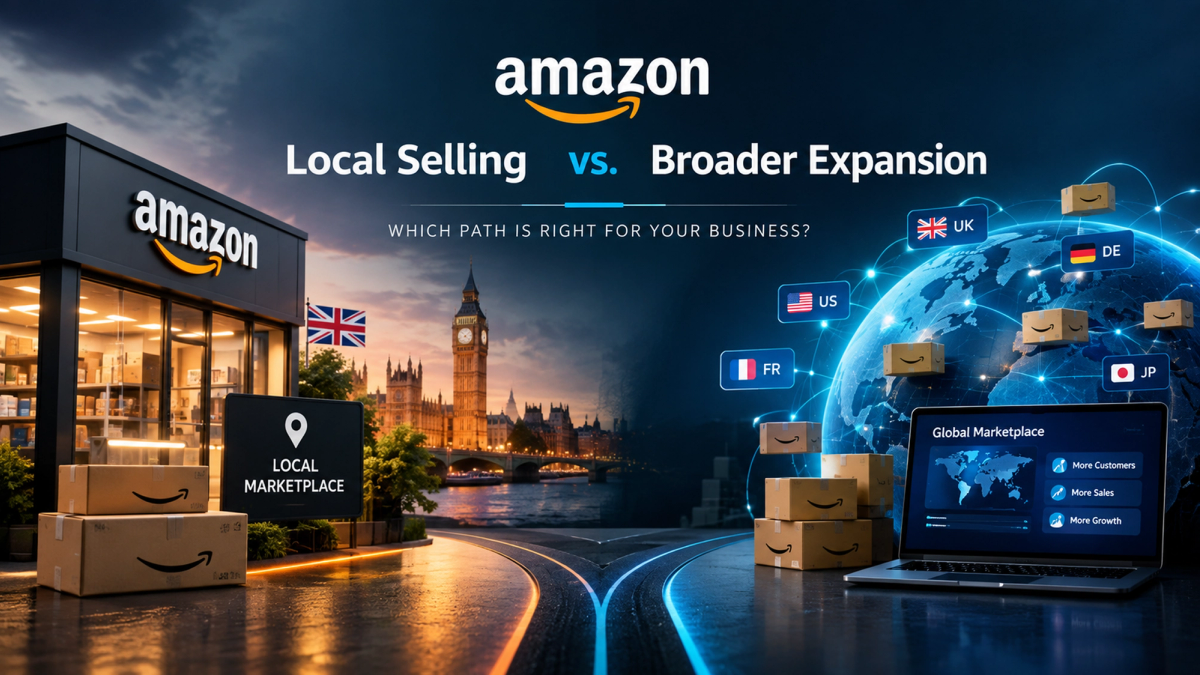
The appropriate model depends on the product, customer base, inventory, delivery capabilities, and overall business structure.
Frequently Asked Questions About Amazon Local Selling
Not necessarily. Amazon's current program involves an application and onboarding process, and some Local Selling services have additional qualification requirements. For example, Amazon states that its Delivery and Services offering has specific eligibility requirements and currently focuses on qualifying furniture-related sellers. (Sell on Amazon)
Amazon currently states that there are no additional fees to participate in Local Selling. Sellers continue to pay applicable selling-plan and category referral fees. (Sell on Amazon)
Yes, Amazon currently lists Local Self-Delivery as a fulfillment option, allowing eligible sellers to use their own fulfillment network for local orders. (Sell on Amazon)
Amazon allows sellers to define local delivery areas, including at the ZIP-code level. The practical size of your service area depends on your fulfillment capabilities and program requirements. (Sell on Amazon)
This point requires special attention because older articles describe BOPIS, or Buy Online, Pickup In-Store, as part of Local Selling. Amazon's Seller Central documentation states that its Local Selling terms and policies were updated effective May 6, 2024 to remove references to the BOPIS program. Amazon's current Local Selling page instead highlights Local Delivery, Local Self-Delivery, and Delivery and Services.
Conclusion
Amazon Local Selling gives businesses another way to connect their Amazon presence with their local operations. Instead of relying exclusively on long-distance fulfillment, sellers can define a local service area and use supported delivery methods to serve nearby customers.
For businesses with physical stores, warehouses, large products, or existing local delivery capabilities, the model can fit naturally into a broader multichannel strategy.
The key is to build the operation around what you can consistently fulfill. Accurate inventory, reliable delivery, trained staff, and a clear service area are all important parts of creating a dependable local selling experience.
Before applying, review Amazon's current requirements and program details because Local Selling features and eligibility can change over time.
Ready to Take the Next Step ?
Protect your Amazon reputation with Bluebug and manage unfair reviews while maintaining a credible brand presence.
Keep reading
What is Amazon Brand Registry: The Complete UK Seller Guide 2026
Learn what is amazon brand registry, how it protects your intellectual property, and steps to enroll in our complete 2026 guide for sellers. Read more now!
Reputation Management Reviews: 2026 Software and Agency Guide
Reputation management reviews: Read objective reputation management reviews to compare software, agency services, and legal dispute protocols. Learn more.
Amazon Reviews: Complete Seller Guide to Growth and Removal Strategy
Amazon reviews dictate your search rankings and sales. Learn how to grow authentic ratings and legally remove unfair negative feedback to protect. Learn more.