
Amazon FBA Fees 2027: A SKU-Level Decision Plan
Prepare for Amazon’s 2027 US fee changes with a product-level review of effective dates, verified inputs, inventory exposure, pricing choices, and evidence, without assuming every ASIN faces the same impact.

Muhammed Nasser
November 22, 2026
Amazon’s 2027 US fee update creates a planning task before it creates a pricing decision. A catalog-wide adjustment may be easy to apply, but it can hide differences between products, stock positions and selling strategies. The useful starting point is a review queue: which items need a fresh estimate, which assumptions are uncertain, and which decisions can wait for better evidence? This guide proposes a practical process for US FBA operators. It explains the policy calendar separately from the seller-owned choices that follow, without treating a platform average as an account forecast.
Map the January and February Fee Changes
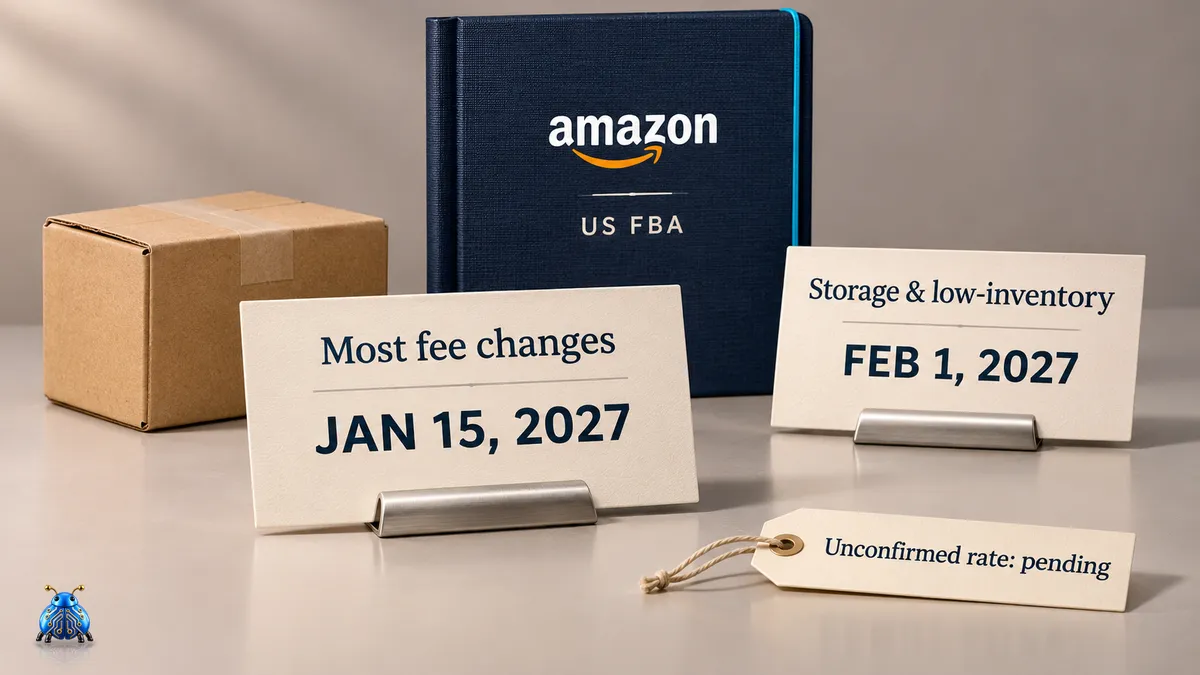
Amazon’s November 5 announcement places most changes on January 15, 2027. Separate storage and low-inventory changes begin February 1. The announced average fulfillment-fee increase is $0.19 per unit; individual products can differ.
Build your planning calendar around the applicable rule, rather than giving every cost line one start date. Record the market, service, source and effective date beside each input. A January selling decision and a February inventory decision may need different assumptions even when they concern the same ASIN.
This is a control over your working model, not a new Amazon reporting requirement. Keep uncertain entries visibly unresolved. If the detailed rate or classification has not been confirmed, show the decision as pending instead of filling the gap with the announced average.
Build a SKU-Level Fee-Change Queue
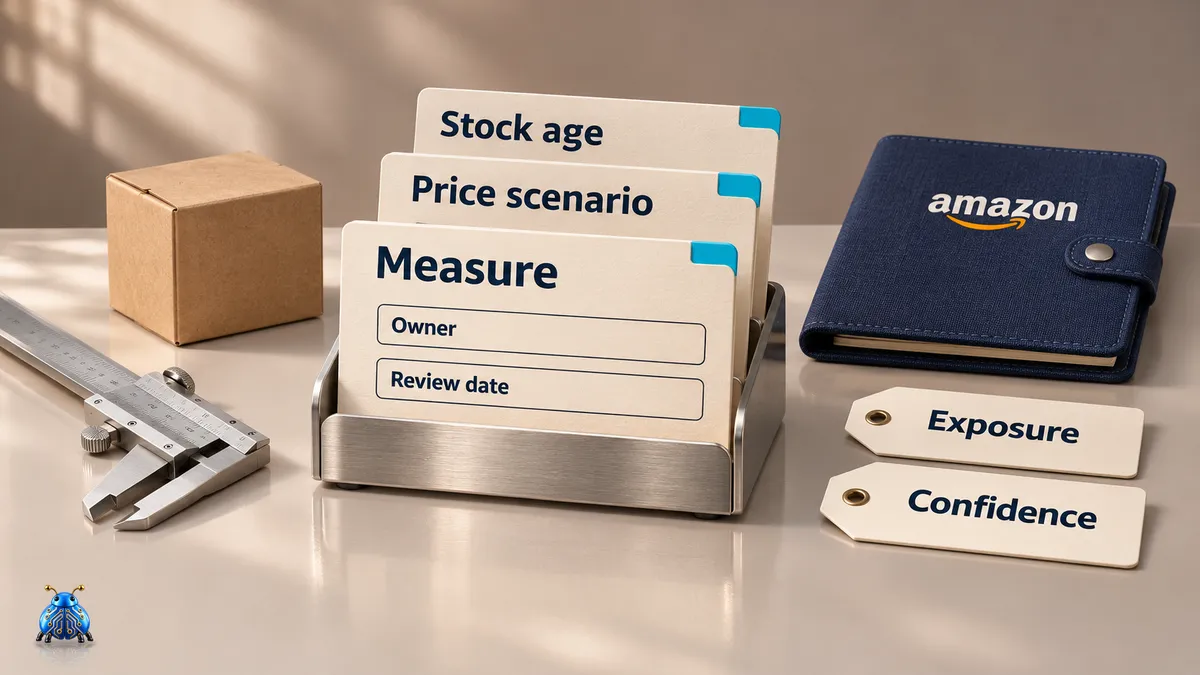
Use your own product records to decide where review time is most valuable. Begin with items close to an internal contribution floor, uncertain classifications or measurements, and inventory that may remain on hand across an effective-date change. A high-volume item can deserve attention even when the estimated per-unit movement looks small.
Keep the queue compact enough to act on. A useful entry identifies the SKU or ASIN, the unresolved input, the decision it could change, an owner and a next review date. Separate the size of the possible exposure from confidence in the estimate.
Assign a concrete next action rather than a vague priority label. One item may need measurement verification; another may need a pricing scenario; another may need a stock-age review. The queue is an editorial operating recommendation. It is not an Amazon-mandated scorecard or proof that an item is unprofitable.
Preserve the Decision Record and Recheck Triggers

Close each review with a decision your team can revisit: retain the current approach, change a defined input or operating choice, or hold until missing information is available. Record the reasoning, owner and review trigger alongside the evidence.
Useful triggers include a material change in price, product measurements, inventory age or the applicable fee source. Choose triggers that fit the product instead of imposing one universal percentage or calendar interval across the catalog. Record a stop condition for any test that creates commercial exposure.
The resulting record should answer three questions: what did we know, what did we decide, and what would make us reconsider? That makes a future review faster without pretending the first estimate was certain. Clear records support better discussion; they do not guarantee a margin, sales or ranking result.
Frequently Asked Questions
Most changes begin January 15, 2027; the announcement gives February 1 timing for storage and low-inventory changes. Check the specific rule before applying it.
No. Treat the average as context. Use a product-specific estimate with matching inputs before deciding whether any commercial change is justified.
Use your own exposure and uncertainty: a thin contribution buffer, unresolved product data or inventory crossing a relevant date can justify earlier review.
No. Save the estimate and its assumptions, then compare it with the relevant observed charge when available. Investigate a difference before drawing a conclusion.
Not automatically. Consider the product’s economics, customer proposition, advertising choices and stock position. A fee input alone cannot select the right response.
Conclusion
Check the input, prioritize the SKU and preserve the decision. Commercial changes should follow product evidence and your own economics.
Resources and Further Reading
3 refrences
- 01
Amazon’s 2027 US Fee Announcement
Discover Amazon’s 2027 US fee changes, including FBA fulfillment costs, storage adjustments, and surcharges.
sellingpartners.aboutamazon.com
- 02
Amazon fee-estimation guidance
Calculate Amazon selling fees, estimate profitability, and evaluate costs before listing or pricing your products.
sell.amazon.com
- 03
Official Seller Forums fee notice
Explore seller discussions and official updates regarding Amazon’s 2027 fee changes and their business impact.
sellercentral.amazon.com
Ready to Take the Next Step?
Discuss your marketplace priorities with Bluebug, and confirm the scope of any support before proceeding.
Keep reading

Amazon UK 2% Surcharge: FBA and MCF Dates
Separate Amazon UK’s FBA and MCF surcharge dates, verify the fulfilment-fee base, and review product and channel economics before repricing, using current sources and clearly documented assumptions for each decision.
Walmart Item-Level Return Rate: SKU Recovery Guide
Prepare for Walmart's January 2027 item-level Return Rate enforcement with a focused SKU triage, correction, and evidence process.

Amazon Shop Direct: Product Data Readiness Guide
Prepare product feeds, checkout, and post-purchase operations for Amazon Shop Direct and Buy for Me without assuming unverified ranking factors.