
Amazon Dangerous-Goods Questions: October 26 Guide
Prepare product evidence for Amazon’s new dangerous-goods listing questions covering refrigerants, suspension components, writing instruments, and pool or spa chemicals.

Muhammed Nasser
October 2, 2026Starting October 26, 2026, Amazon says sellers creating or editing listings in four named product groups will need to answer new dangerous-goods questions. The affected areas cover refrigeration products, suspension products, writing instruments, and pool or spa chemicals.
The questions are intended to help Amazon classify products and determine shipping eligibility while reducing unnecessary disposal costs and fees. Because Amazon's notice contains conflicting timing language around August 31, sellers should prepare their product evidence now while verifying the live listing workflow before relying on that date.
What Amazon Has Confirmed for October 26
Amazon's official notice states that the new questions will appear when sellers create a new listing or edit an existing listing in the selected product groups from October 26, 2026.
The questions are designed to collect dangerous-goods information earlier in the listing process. This information helps Amazon classify products and determine which shipping methods are available.
The change is particularly important for sellers managing affected ASINs because the answers should be based on actual product information rather than assumptions made from a broad category or product title.
Amazon's notice is U.S.-focused. Sellers should therefore avoid assuming that the same timing, category mapping, or workflow applies identically to other marketplaces. Before making a catalog-wide change, check the relevant marketplace account and live listing workflow.
There is also an unresolved date conflict in Amazon's notice. One sentence states that existing listings require no action before August 31, 2026, while the same notice describes the new questions as taking effect October 26. Rather than inventing a corrected date, sellers should treat October 26 and the create-or-edit trigger as the confirmed operational point and verify the August 31 language against the live workflow and current Amazon guidance.
Which Four Product Groups Are Affected?
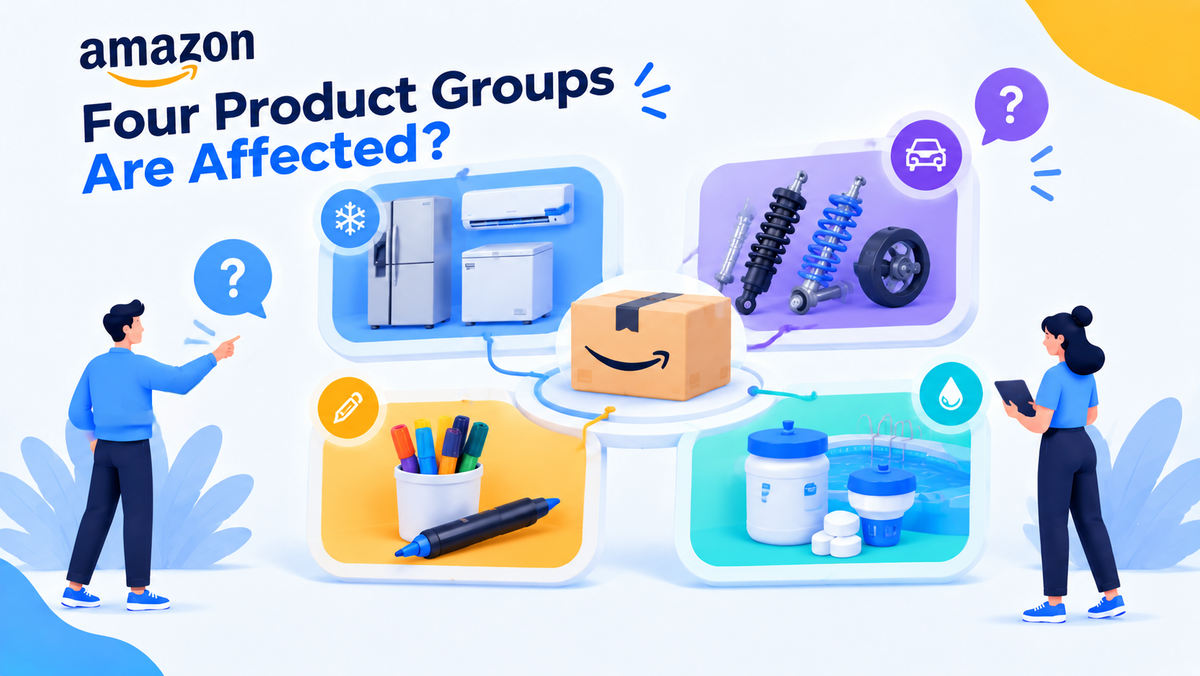
Amazon identifies four product groups for the new questions:
- Refrigerators, air conditioners, freezers, and similar products — questions concern refrigerant gas properties.
- Shock absorbers and suspension lift supports — questions concern the mechanism.
- Markers and writing instruments — questions concern ink properties.
- Pool or spa water-treatment products — questions concern chemical composition and packaging.
The important point is that sellers should build their affected-ASIN list using actual product facts, not keywords alone.
A broad catalog category can contain products with different formulations, mechanisms, or materials. Two products that appear similar in a catalog may require different answers to dangerous-goods questions.
Before editing an affected listing, confirm the exact product and its category mapping in the live create-or-edit workflow. This reduces the risk of applying information from one product or model to another.
For larger catalogs, create an ASIN-level working list that identifies the relevant product group and the evidence required for each item. This makes the October 26 change an operational preparation exercise rather than a last-minute catalog task.
Build a Product Data Pack Before Editing

The most practical preparation is to collect defensible product information before someone opens the listing editor.
Depending on the product, the evidence pack may include:
- Manufacturer specification sheets
- Safety Data Sheets
- Refrigerant type and quantity
- Mechanism details
- Ink composition or flammability information
- Chemical ingredients and concentrations
- Packaging format
- Product labels
- Transport classifications
- Other product-specific dangerous-goods documentation
The evidence should correspond to the exact product version being listed or edited. A supplier statement for a similar model, formulation, or product should not automatically be treated as a substitute.
For each document, record useful traceability information such as the document owner, revision date, and ASINs covered. This creates a reusable product record that can be updated when the product changes instead of forcing the team to rediscover the evidence during every listing edit.
The same principle applies when information is incomplete. If the supplier cannot confirm a required answer, pause the edit and obtain authoritative documentation rather than guessing.
Amazon says accurate and complete answers can help listings go live without delays, support available shipping methods, and reduce unnecessary disposal costs and fees. The exact operational consequence of an incomplete or incorrect answer can vary, so sellers should avoid assuming that every missing response will produce the same result.
The objective is therefore not simply to answer the questions quickly. It is to create a traceable evidence chain from the product to the answer entered into Amazon.
Frequently Asked Questions
Amazon's notice states that the questions apply from October 26, 2026, when sellers create a new listing or edit an existing listing in the named product groups.
Amazon names refrigeration products, shock absorbers and suspension lift supports, markers and writing instruments, and pool or spa water-treatment products.
Amazon says the questions appear when a relevant listing is created or edited. Because the notice also contains conflicting August 31 language, sellers should verify the live workflow before relying on that date.
Depending on the product, sellers may need manufacturer specifications, Safety Data Sheets, composition details, mechanism information, refrigerant information, labels, packaging data, and other product-specific evidence.
Do not guess. Pause the listing edit, request authoritative documentation, and escalate through the appropriate compliance or Seller Support route when necessary.
Conclusion
Amazon's October 26 dangerous-goods question change is best approached as an evidence-readiness exercise. Sellers should identify affected ASINs, confirm the product's actual characteristics, and collect current manufacturer documentation before making listing edits.
The August 31 language in Amazon's notice remains an unresolved source conflict, so sellers should verify the live workflow and current Amazon guidance rather than inventing an interpretation.
Preparing the evidence in advance gives catalog and compliance teams a clearer basis for answering the new questions and handling any follow-up documentation requests.
Resources and Further Reading
2 refrences
Ready to Take the Next Step?
Build clearer Amazon compliance workflows with Bluebug's structured seller research and operational guidance.
Keep reading
Prime Big Deal Days 2026: Final-Week Seller Plan
Use this final-week Prime Big Deal Days checklist to protect inventory, margin, ads, listings, customer experience, and post-event Q4 decisions.
Amazon Local Selling: The Complete Guide for Sellers in 2026
Learn how Amazon Local Selling works, its benefits, fulfillment options, eligibility, setup process, and how sellers can use local sales to grow their business.
What is Amazon Brand Registry: The Complete UK Seller Guide 2026
Learn what is amazon brand registry, how it protects your intellectual property, and steps to enroll in our complete 2026 guide for sellers. Read more now!