
Prime Big Deal Days 2026: Final-Week Seller Plan
Use this final-week Prime Big Deal Days checklist to protect inventory, margin, ads, listings, customer experience, and post-event Q4 decisions.

Muhammed Nasser
September 30, 2026Amazon has confirmed that Prime Big Deal Days 2026 will run for 48 hours, from 12:01 a.m. PDT on October 6 through 11:59 p.m. PDT on October 7. For Amazon.com sellers, the final week is now an operating window: verify what is genuinely sellable, protect profitable demand, and make live-event decisions through a clear runbook.
The U.S. deal-sourcing deadline was extended to September 22 and has passed. Earlier FBA arrival targets have also passed, and Amazon warned that later inventory might not be processed in time for the event. The remaining work is therefore less about adding optimistic volume and more about controlling the inventory, advertising, and customer experience that are actually available.
This condensed visual plan focuses on the three systems that connect the rest of the approved article: inventory is the hard constraint, advertising determines how quickly demand reaches that constraint, and the October 6-7 runbook assigns ownership when conditions change. The guidance uses the U.S. event schedule. Sellers in other marketplaces should confirm local timing, promotion availability, fees, and eligibility in Seller Central.
Reforecast Demand and Inventory for the Final Week
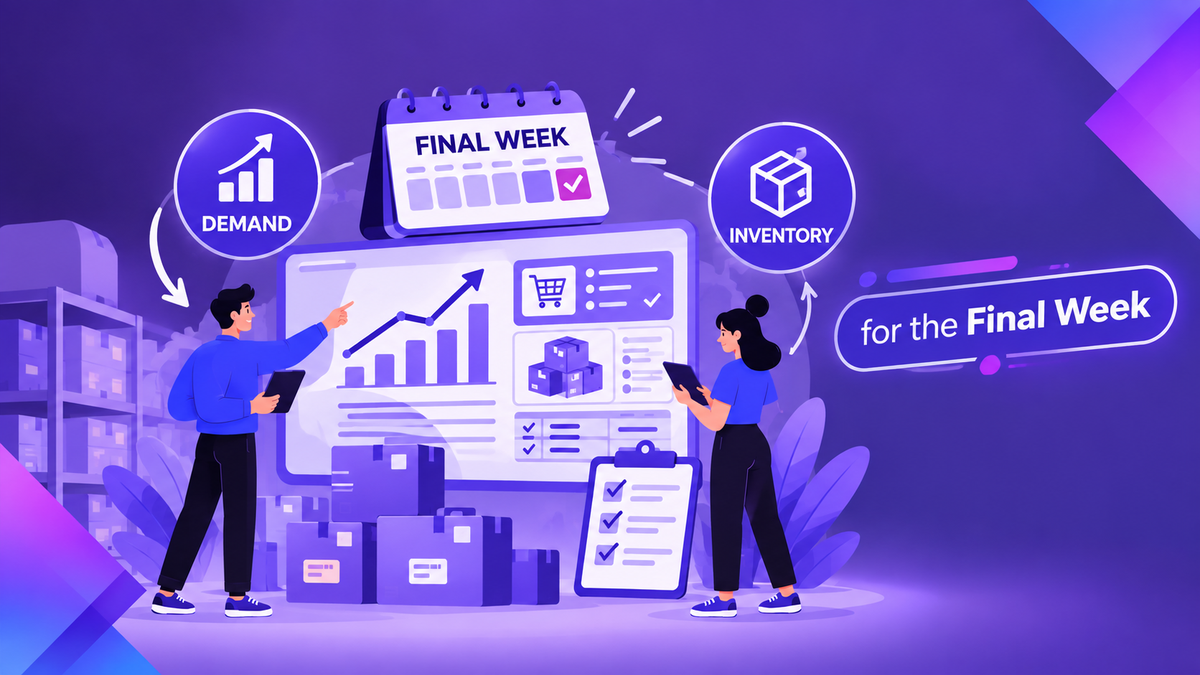
Start with sellable units by ASIN, not every unit visible somewhere in the network. Separate available inventory from inbound, reserved, stranded, suppressed, or transfer inventory. Stock that is not buyable now can inform a probability-weighted scenario, but it should not support a committed event budget until it becomes sellable.
For each priority ASIN, build one operating view that includes:
- sellable units now;
- recent average daily units;
- conservative, expected, and high event demand;
- days of cover under each scenario;
- replenishment confirmed as sellable;
- the inventory threshold that triggers lower bids or paused promotions;
- the owner of that decision.
Amazon's 2026 peak-season guidance urged sellers to send inventory early and warned that inventory arriving after the published target might not be processed in time. The final-week implication is practical: treat uncertain inbound units as uncertain. Do not use them to justify a high-spend plan that depends on stock customers cannot yet buy.
This protects more than inventory. A hero ASIN that stocks out early can lose valuable traffic for the rest of the event. A low-margin ASIN can absorb spend that would be more useful elsewhere. Flag substitutes, variation-level imbalances, and delivery promises that could deteriorate as stock shifts. The aim is controlled continuity, not maximum revenue at any cost.
Set Advertising Budgets and Stop Rules
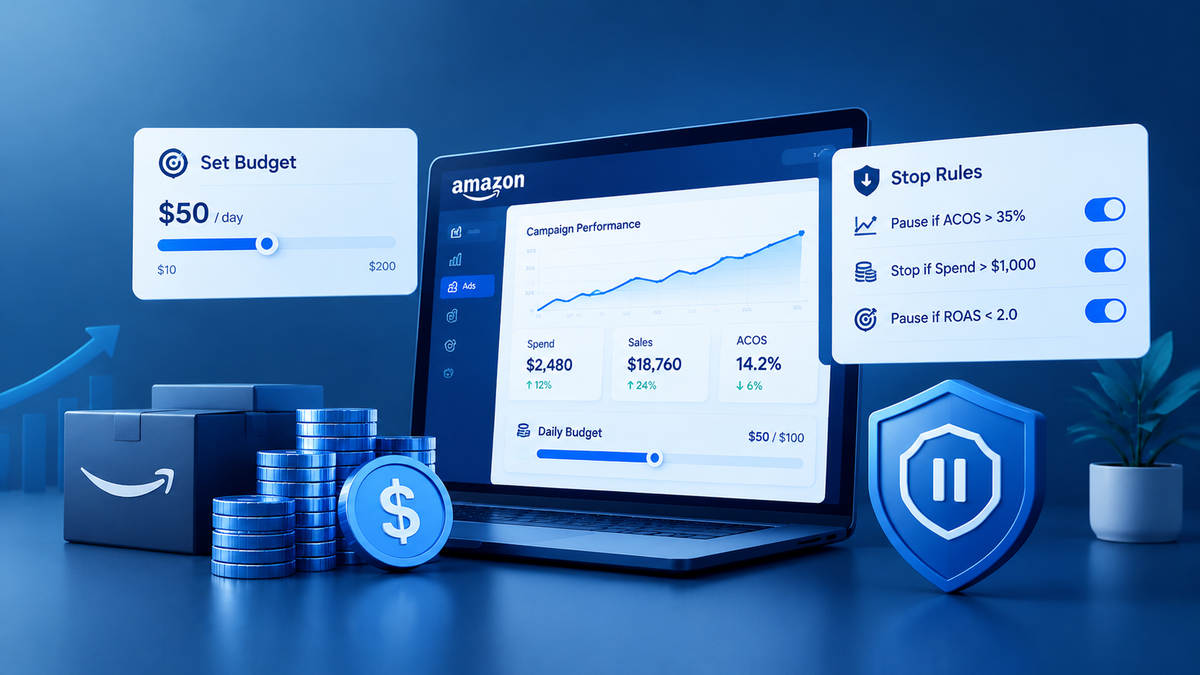
Amazon Ads notes that campaigns can spend faster during high-traffic events and recommends monitoring bids and budgets multiple times during Prime Day and Prime Big Deal Days. That supports controlled flexibility, not a blanket increase across every campaign.
Group campaigns by job:
- defend branded demand;
- capture high-intent non-brand searches;
- support promoted ASINs;
- target complementary products or categories;
- run tightly capped discovery;
- re-engage shoppers where an eligible option exists.
Give each group a daily budget, a measurement window, and a stop or escalation rule. Useful triggers include spend without an order, contribution after ad cost, conversion deterioration, loss of the Featured Offer, an inactive promotion, or low stock cover. Set the thresholds from the seller's own economics and recent performance. There is no universal event ACOS target.
For example, suppose a campaign normally converts at 14% and can profitably spend up to $18 per attributed order. During the event, the team checks it every two hours. If spend reaches $36 without an order, or if the ASIN drops below one day of event stock, the operator lowers bids or pauses the campaign. If conversion, contribution, and stock remain healthy, the operator can release a pre-approved reserve budget.
Before the event, use recent search-term and placement data to remove obvious waste. Move budget toward effective campaigns and reduce or pause weak terms. Keep a short event log of every material bid, budget, or targeting change. Without that record, the post-event team may mistake an operator intervention for a change in customer demand.
If event language appears in advertising, check the current Amazon Ads policy for high-velocity events. Placement, destination, timing, pricing, and promotional claims can have specific requirements. Do not assume language accepted on a storefront is automatically acceptable in every ad placement.
Build the October 6-7 Monitoring Runbook
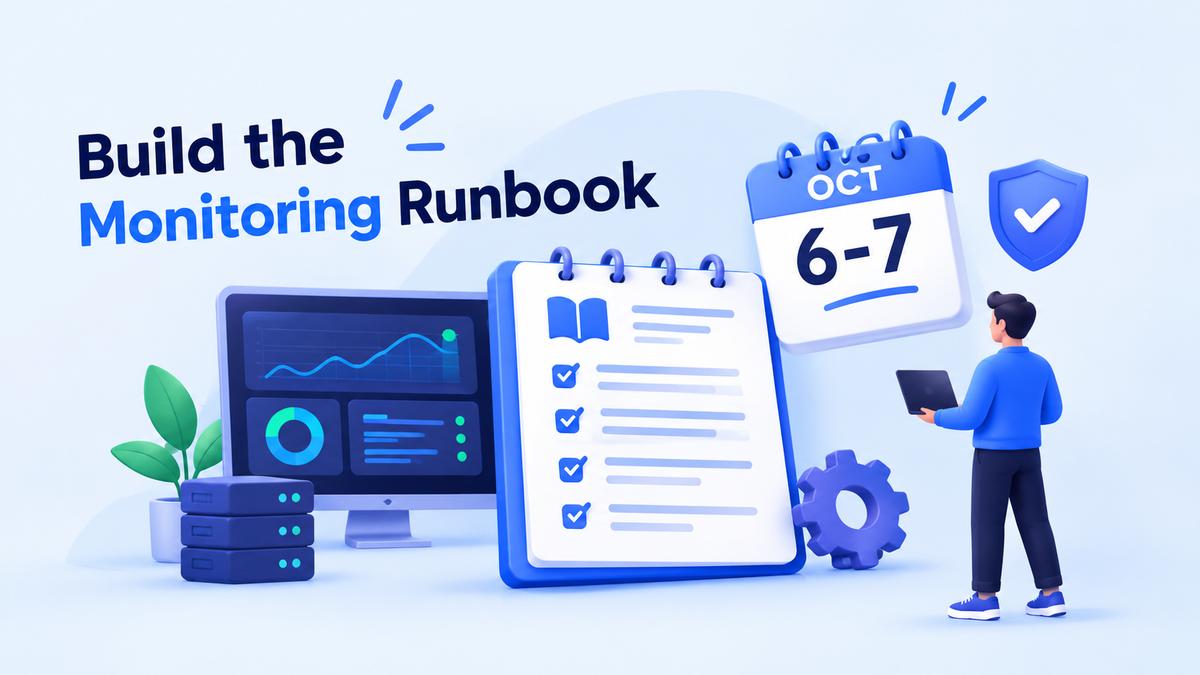
A dashboard shows signals. A runbook states who checks each signal, how often they check it, the decision threshold, and the response they are authorized to make. Build those rules before traffic moves so the team is not negotiating ownership during the event.
Assign named owners for:
- sellable inventory and stock cover;
- live price and promotion status;
- Featured Offer and delivery promise;
- campaign pacing, spend, conversion, and contribution;
- listing suppression or unexpected content changes;
- customer questions and emerging expectation gaps;
- operational incidents and escalation;
- the event log.
Use local time alongside PDT. Amazon's confirmed U.S. event starts at 12:01 a.m. PDT on October 6 and ends at 11:59 p.m. PDT on October 7. A distributed team should write its local shift times into the runbook, define the handoff cadence, and identify the decision-maker who remains available when a change exceeds the operator's authority.
A practical authority model might allow the advertising lead to adjust bids within an approved range while reserving price changes for the commercial owner. The inventory lead checks stock cover every two hours and raises an alert at 1.5 days of cover. The listing owner checks suppression, the Featured Offer, and the customer-facing offer at every shift handoff.
Keep each event-log entry short and usable: timestamp, ASIN or campaign, action, reason, owner, and recheck time. That creates an audit trail for the post-event review and prevents teams from explaining performance with memory alone.
Frequently Asked Questions
For Amazon.com, Amazon confirms that the event starts at 12:01 a.m. PDT on October 6 and ends at 11:59 p.m. PDT on October 7. Amazon says the event will be available in 22 countries, but dates can vary, so sellers should confirm their local marketplace schedule.
Amazon's official U.S. seller update extended the deal-sourcing deadline to September 22, 2026, which has passed. Other promotion tools may have different availability and eligibility. Check the live Deals, Price Discounts, and Coupons tools in the relevant Seller Central account rather than relying on a general article.
No. Increase or reallocate budget only where contribution margin, conversion, campaign purpose, and stock cover support it. Set stop rules and a reserve budget before the event.
Correct factual errors, compliance risks, broken variations, and suppressed offers. Avoid broad creative changes that cannot be properly reviewed or measured before traffic increases.
Monitor sellable inventory, live price and promotion status, Featured Offer, delivery promise, ad pacing, conversion, listing health, customer questions, and operational incidents. Assign an owner and action threshold to each signal.
Review ASIN-level traffic, conversion, contribution, advertising, stock, returns, questions, reviews, and the event log. Use the results to decide what to scale, repair, retest, or stop for the rest of Q4.
Conclusion
The final week before Prime Big Deal Days is about disciplined execution. Forecast from sellable inventory, give every advertising campaign a clear job and stop rule, and make ownership explicit for the October 6-7 event window.
These three systems also protect the work covered elsewhere in the full editorial article: margin guardrails, listing stability, customer experience, and the evidence needed for the rest of Q4. The strongest plan is the one that identifies risk early, supports controlled decisions, and preserves enough context to understand what happened afterward.
Sources
5 refrences
Ready to Turn Event Activity Into Better Q4 Decisions?
Bluebug turns Amazon signals into actionable insights, helping sellers identify what to scale, fix, and test.
Keep reading
Amazon Local Selling: The Complete Guide for Sellers in 2026
Learn how Amazon Local Selling works, its benefits, fulfillment options, eligibility, setup process, and how sellers can use local sales to grow their business.
What is Amazon Brand Registry: The Complete UK Seller Guide 2026
Learn what is amazon brand registry, how it protects your intellectual property, and steps to enroll in our complete 2026 guide for sellers. Read more now!
Reputation Management Reviews: 2026 Software and Agency Guide
Reputation management reviews: Read objective reputation management reviews to compare software, agency services, and legal dispute protocols. Learn more.